
The Silent Killer Choking India’s Cities
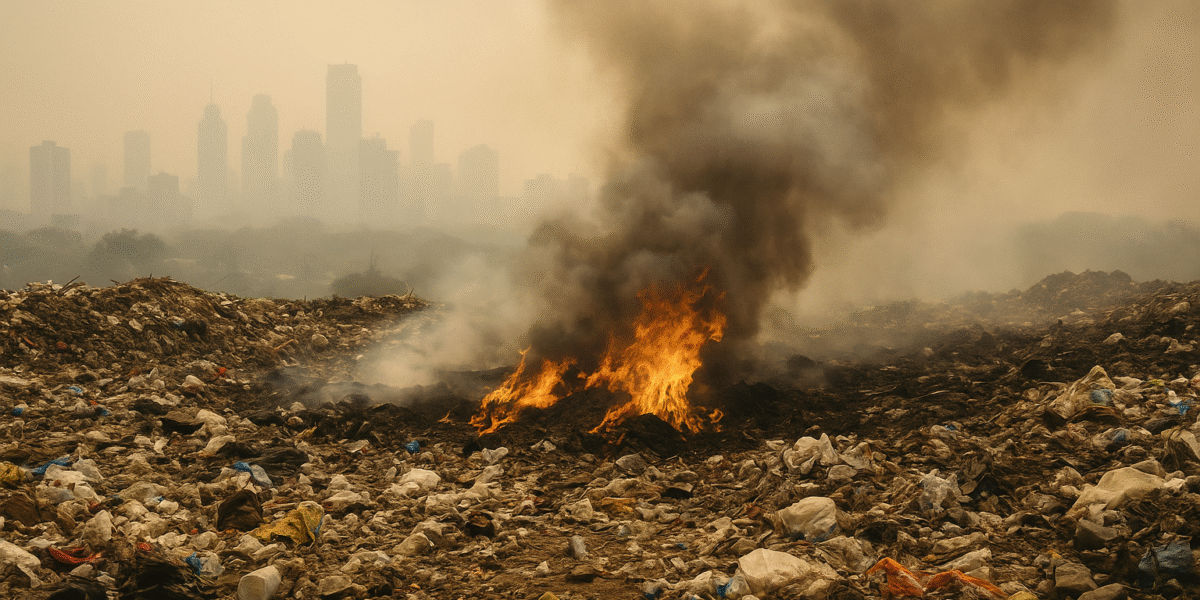
Air pollution in India has evolved from an environmental concern to a full-blown public health emergency. As of December 2025, millions of citizens breathe toxic air daily. Current Air Quality Index readings paint a grim picture: New Delhi at hazardous levels frequently crossing 300, Mumbai at 189, Kolkata at 181, Bangalore at 132, and Ahmedabad at 184.
This analysis examines how air quality has changed since 2019 and explores how effective waste management can reverse this alarming trend.
Understanding AQI: What the Numbers Mean
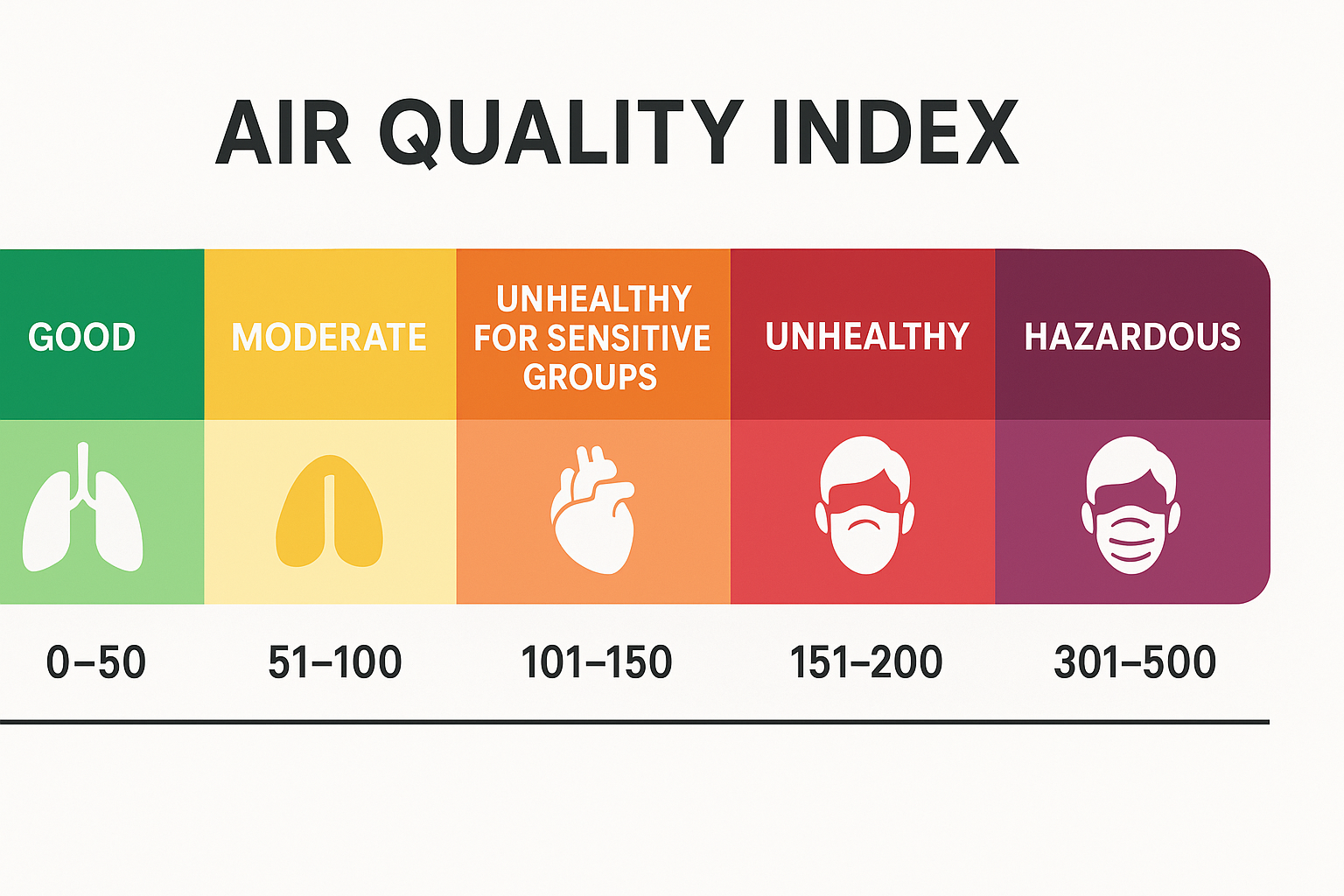
- 0-50 (Good): Minimal health risk
- 51-100 (Moderate): Safe for most people
- 101-150 (Unhealthy for Sensitive Groups): Risk for sensitive individuals
- 151-200 (Unhealthy): Everyone affected
- 201-300 (Very Unhealthy): Serious health effects
- 301-500 (Hazardous): Emergency conditions
Air Quality Comparison: 2019 vs 2025
Delhi: The Crisis Deepens
2019: Delhi recorded a PM2.5 reading of 98.6 µg/m³, ranking as India’s second dirtiest city with year-round pollution challenges.
2025: The situation has dramatically worsened. Recent data shows Delhi with AQI frequently crossing 300 in the hazardous category. PM2.5 levels have increased significantly, exceeding safe limits by over 10 times during winter months.
Mumbai: Coastal City’s Struggle
2019: Mumbai enjoyed relatively better air quality, benefiting from coastal winds that dispersed pollutants.
2025: The city now faces concerning deterioration with AQI at 189 (unhealthy). Monthly averages regularly exceed National Ambient Air Quality Standards, with some neighborhoods recording AQI above 300.
Bangalore: The IT Hub’s Challenge
2019: Bangalore was among India’s cleaner cities, with air quality generally within acceptable limits.
2025: Current AQI stands at 132 (unhealthy for sensitive groups). While relatively better than other metros, the city shows clear deterioration from 2019 due to rapid urbanization and vehicular growth.
Ahmedabad: Industrial Impact
2019: Moderate pollution levels from industrial emissions and traffic.
2025: AQI now at 184 (unhealthy), with noticeable increases particularly during winter months when atmospheric conditions trap pollutants.
Kolkata: Eastern Metro Challenge
2019: Second to Delhi in air pollution among major cities.
2025: AQI at 181, with pollution levels remaining consistently high throughout the year and monthly averages exceeding national standards.

The Hidden Culprit: How Waste Fuels Air Pollution
While vehicular emissions and industrial output dominate discussions, poor waste management is an often-overlooked major contributor to air pollution.
The Alarming Statistics
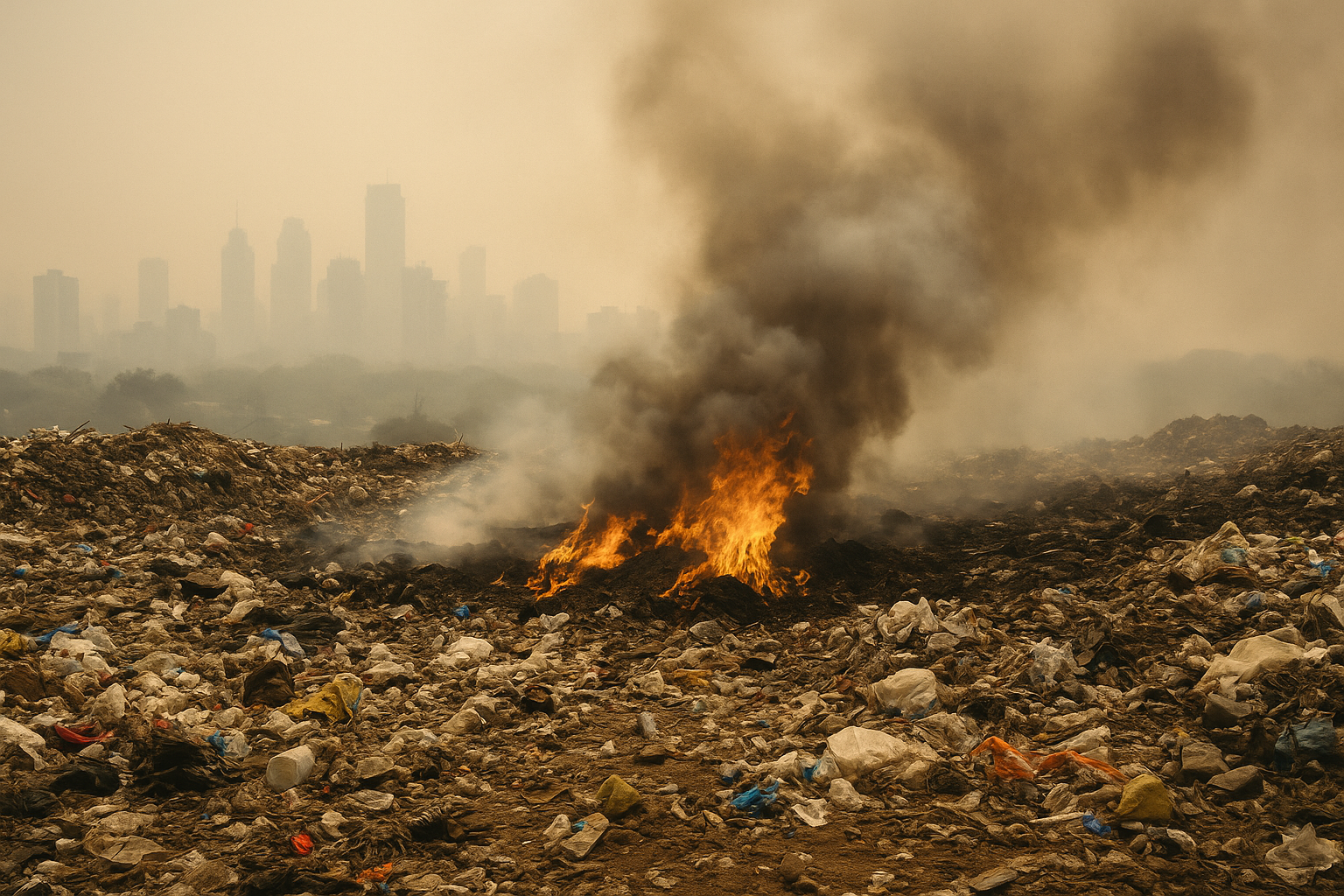
Studies reveal that 2% to 24% of municipal solid waste generated gets burned across Indian cities. This releases massive quantities of harmful pollutants directly into the atmosphere. Landfill fires emit nearly 22,000 tons per year of pollutants in Mumbai alone, including carbon monoxide, particulate matter, nitrogen oxides, sulfur dioxide, and toxic dioxins/furans.
Without strong waste management policies, open waste burning could become India’s largest source of air pollution by 2035. Currently, India generates 62 million tons of municipal waste annually, with only a fraction properly managed. Construction waste adds another 150-500 million tonnes yearly, with just 1% recycled.
Why Waste Management Matters
Open burning of waste releases PM2.5, PM10, toxic gases, and carcinogenic compounds directly into the air we breathe. From plastic waste (0.025 million tons daily, expected to rise to 34 MT per year by 2031) to e-waste (2 million tons annually), improper disposal creates a pollution nightmare.
At least 140 million people in India breathe air exceeding WHO safe limits by 10 times or more, indicating a massive public health emergency.
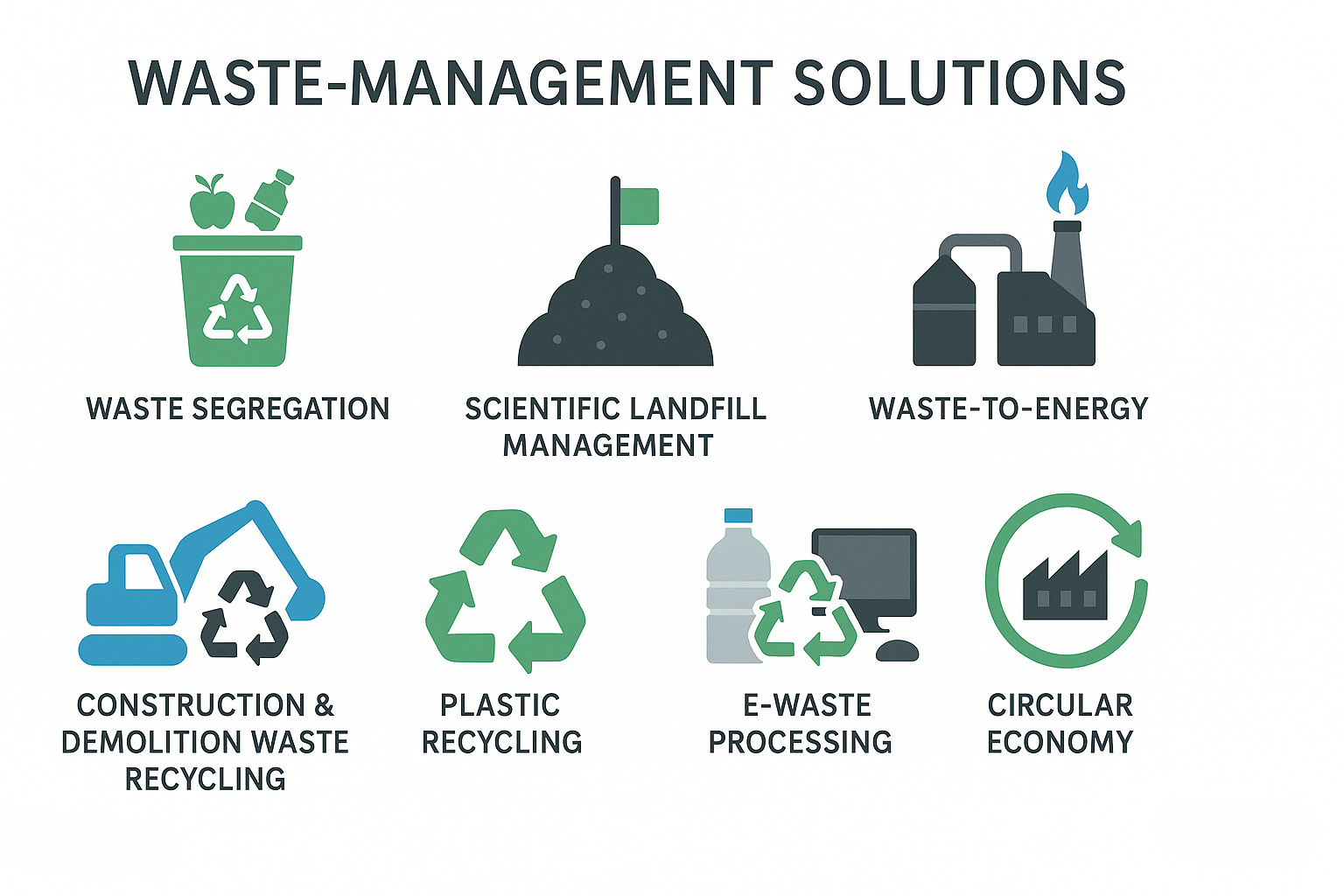
The Solution: 7 Waste Management Strategies to Clear the Air
1. Waste Segregation at Source
Implement mandatory color-coded bins for wet, dry, and hazardous waste in every household. Proper segregation prevents mixing combustible materials with organic waste, reducing toxic waste fires and enabling efficient recycling.
Impact: Eliminates the root cause of uncontrolled burning and enables material recovery.
2. Scientific Landfill Management
Convert open dumpsites into engineered landfills with methane capture systems, daily soil cover, and fire prevention protocols. This eliminates landfill fires that emit thousands of tons of pollutants annually while generating clean energy from captured methane.
Impact: Prevents spontaneous combustion and captures greenhouse gases for energy generation.
3. Waste-to-Energy Conversion
Establish modern waste-to-energy plants with advanced emission controls, bio-methanation plants for organic waste, and decentralized composting facilities. This eliminates open burning while reducing fossil fuel demand.
Impact: Converts waste liability into energy asset with minimal emissions.
4. Construction & Demolition Waste Management
Enforce dust suppression at construction sites, establish C&D waste recycling facilities, and promote recycled construction materials. Proper management can reduce urban PM2.5 levels by up to 40%.
Impact: Addresses one of the largest sources of urban particulate matter pollution.
5. Plastic Waste Recycling Infrastructure
Develop comprehensive plastic collection networks, enforce producer take-back schemes, and create markets for recycled products. Every ton of plastic recycled prevents approximately 2 tons of CO2-equivalent emissions and eliminates toxic burning.
Impact: Reduces dioxins, furans, and other carcinogens from plastic burning.
6. E-Waste Collection and Processing
Establish authorized collection centers in every neighborhood and develop safe dismantling facilities. Proper processing eliminates toxic heavy metals and persistent organic pollutants from entering the air.
Impact: Prevents release of heavy metals like mercury, lead, and cadmium into the atmosphere.
7. Circular Economy Integration
Promote product designs that minimize waste, encourage repair and reuse over disposal, and implement deposit-refund schemes. This reduces overall waste generation and manufacturing pollution.
Impact: Reduces waste at source and decreases pressure on disposal systems.
Success Story: Indore’s Clean Air Model
Indore, India’s cleanest city for seven consecutive years, demonstrates what’s possible through:
- 100% door-to-door waste collection
- Complete source segregation
- Zero-landfill approach with waste-to-energy facilities
- Active citizen participation
Result: Significantly better air quality compared to similar-sized industrial cities.
What Citizens Can Do Today
At Home:
- Segregate waste into wet, dry, and hazardous categories
- Compost kitchen waste using home composters
- Minimize plastic usage and choose reusable alternatives
- Dispose of e-waste through authorized centers
In Your Community:
- Report illegal waste burning to authorities
- Participate in local waste management initiatives
- Organize neighborhood clean-up drives
- Educate others about the waste-air quality connection
The Economic Case
Establishing comprehensive waste management infrastructure requires ₹1.5-2 lakh crores investment over five years. However, poor waste management currently costs India nearly $13 billion annually in health and environmental damages.
Returns include:
- Healthcare savings from reduced pollution-related diseases
- Energy generation potential of 500-600 MW from waste-to-energy
- Material recovery creating economic value
- Millions of jobs in collection, processing, and recycling sectors
- Increased property values in cleaner neighborhoods
Conclusion: A Breathable Future Within Reach
The air quality comparison between 2019 and 2025 shows clear deterioration across all major Indian cities. At least 140 million people breathe air exceeding WHO safe limits by 10 times or more. Air pollution now offsets nearly 1.36% of India’s GDP.
However, the solution is within reach. By integrating waste management into air quality strategies, India can simultaneously address pollution, create economic opportunities, and build sustainable cities. The technology exists, the economic case is compelling, and the health imperative is undeniable.
Every piece of properly managed waste, every prevented fire, and every ton of material recycled brings us closer to breathable air. The question isn’t whether India can reverse this crisis, but whether we have the determination to act.
The time is now. Let’s not waste it.
Key References & Sources
- IQAir – Delhi Air Quality Index: https://www.iqair.com/india/delhi/delhi
- IQAir – India Air Quality: https://www.iqair.com/us/india
- DST Clean Air Research Initiative: https://dst.gov.in/clean-air-research-initiative-cari
- WRI India – Combating Open Waste Burning: https://wri-india.org/perspectives/combating-open-waste-burning-reduce-air-pollution
- ScienceDirect – Open Waste Burning Study: https://www.sciencedirect.com/science/article/abs/pii/S0269749121018923
- TERI – Waste Management: https://www.teriin.org/waste
- Invest India – Waste to Wealth Mission: https://www.investindia.gov.in/waste-to-wealth
- EPW – India’s Waste Management: https://www.epw.in/engage/article/institutional-framework-implementing-solid-waste-management-india-macro-analysis
- Central Pollution Control Board (CPCB): https://cpcb.nic.in/
- National Clean Air Programme: https://ncap.moef.gov.in/
Author’s Note: This analysis draws on data from official government sources, international research organizations, and real-time air quality monitoring networks. Air quality data changes constantly; figures represent specific snapshots and should be supplemented with current monitoring data.
Disclaimer: All statistics and data points are linked to their original sources for verification and further reading.