

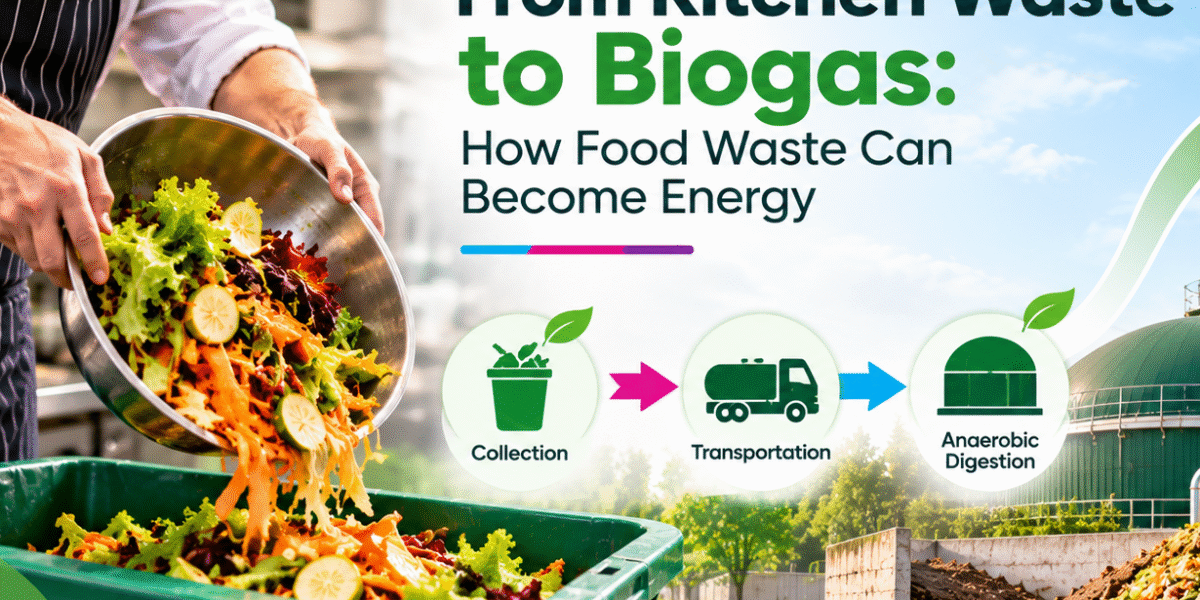
From Kitchen Waste to Biogas: How Food Waste Can Become Energy
Every day, restaurants, hotels, cafés, canteens and commercial kitchens generate large quantities of food waste.
Vegetable peels, fruit scraps, preparation waste, expired food and leftover meals often end up in waste bins. But what if some of that waste could have a second life?
Food waste can be more than something that needs to be discarded. It can become a resource for energy recovery.
One of the ways this happens is through anaerobic digestion, a biological process that can convert suitable organic waste into biogas.
For businesses looking to improve their food waste management, understanding this journey is an important step towards more responsible waste handling.
What Is Biogas?
Biogas is a renewable gas produced when organic matter breaks down in an oxygen-free environment.
It primarily contains:
- Methane
- Carbon dioxide
- Small quantities of other gases
The methane content gives biogas its energy value, allowing it to be used in suitable applications after appropriate treatment.
This is why organic waste such as food scraps can potentially become part of a waste-to-energy system.
How Does Food Waste Become Biogas?
The process begins long before the waste reaches a processing facility.
1. Food Waste Is Generated
Restaurants and hotels generate food waste throughout their operations.
This includes:
- Vegetable and fruit waste
- Food preparation scraps
- Plate waste
- Buffet leftovers
- Spoiled food
- Kitchen waste
- Other suitable biodegradable organic material
The first step is identifying and separating the organic fraction.
2. Food Waste Is Segregated
For effective food waste management, organic waste should be kept separate from materials such as plastic, glass, metal and other non-organic waste.
Good segregation at the source makes downstream processing more efficient.
For restaurants and hotels, this can mean having clearly designated food-waste bins in kitchens, preparation areas and other relevant locations.
Better segregation = better processing potential.
3. Food Waste Is Collected
Once segregated, the waste can be collected through a planned food waste collection service.
For commercial kitchens, regular collection is particularly important because food waste can quickly create:
- Odour
- Pest attraction
- Hygiene concerns
- Storage problems
- Overflowing bins
A professional collection system helps ensure that segregated food waste moves to the appropriate processing destination.
4. The Waste Reaches a Processing Facility
After collection and transportation, suitable organic waste can be prepared for processing.
Depending on the facility and waste stream, preparation may involve removing contaminants and unwanted materials and making the organic material suitable for digestion.
This is an important point:
Not everything placed in a food-waste bin automatically becomes biogas.
The quality and composition of the feedstock matter.
That is why proper segregation at the restaurant or hotel is so important.
5. Anaerobic Digestion Does the Work
The key process behind food waste to biogas is called anaerobic digestion.
“Anaerobic” means without oxygen.
In an anaerobic digestion system, microorganisms break down biodegradable organic matter inside a controlled environment.
The process produces two important outputs:
Biogas
The gas generated contains methane and can be used as an energy source after appropriate treatment.
Digestate
The remaining material, known as digestate, can potentially be further processed or used in appropriate applications depending on its composition and regulatory requirements.
So instead of simply disposing of organic waste, the process can recover energy and useful material.
6. Biogas Can Become a Source of Energy
The biogas produced through anaerobic digestion can be used in suitable energy applications.
Depending on the system and level of treatment, biogas can be used for:
- Heat generation
- Electricity generation
- Cooking or thermal applications
- Further upgrading into biomethane
This creates the basic food waste-to-energy pathway:
Restaurant Food Waste → Collection → Anaerobic Digestion → Biogas → Energy
Why Is Food Waste-to-Energy Important for Restaurants?
For restaurants and hotels, food waste management is not simply an environmental initiative.
It can become part of a broader operational approach to managing waste responsibly.
1. Diverts Organic Waste From Disposal
Recovering value from suitable food waste can reduce the amount of organic material requiring conventional disposal.
2. Supports Resource Recovery
Food waste contains organic matter that can be converted into useful outputs.
3. Reduces Waste Accumulation
Regular food waste collection helps prevent large quantities of organic waste from sitting in restaurant back-of-house areas.
4. Supports the Circular Economy
Instead of the traditional:
Take → Use → Throw Away
the model becomes:
Use → Collect → Process → Recover → Reuse
5. Creates an Energy Opportunity
Biogas provides a pathway through which organic waste can contribute to renewable energy generation.
What Types of Businesses Can Benefit?
Food waste-to-energy systems can be relevant for businesses generating significant quantities of organic waste, including:
- Hotels
- Restaurants
- Cafés
- Cloud kitchens
- Food courts
- Canteens
- Catering businesses
- Institutional kitchens
- Large commercial kitchens
For these businesses, the key is establishing a reliable system for segregation, collection and responsible processing.
Food Waste Management Starts in the Kitchen
The technology at the processing facility is only one part of the equation.
The process actually starts inside your restaurant.
Consider this simple journey:
STEP 1 — SEGREGATE
Keep food waste separate from other waste.
↓
STEP 2 — STORE
Use suitable containers and avoid unnecessary accumulation.
↓
STEP 3 — COLLECT
Arrange regular collection based on your waste generation.
↓
STEP 4 — TRANSPORT
Move the segregated organic waste to an appropriate processing facility.
↓
STEP 5 — PROCESS
Suitable food waste can undergo anaerobic digestion.
↓
STEP 6 — RECOVER
Biogas can be used as an energy source, while other outputs can be appropriately managed.
Your kitchen waste can have a journey beyond the garbage bin.
What About Mumbai Restaurants and Hotels?
Mumbai has a large and diverse food-service industry, from independent restaurants and cafés to hotels, food courts and large commercial kitchens.
With high volumes of food being prepared and served every day, effective food waste collection in Mumbai can play an important role in keeping organic waste within a structured management system.
For businesses generating substantial quantities of waste, the focus should move beyond simply asking:
“Who will pick up our waste?”
The better question is:
“Where does our waste go after it is collected?”
That shift—from disposal to resource recovery—is at the heart of a more circular approach to waste management.
How Clean Geosphere Helps
At Clean Geosphere, we believe waste should not automatically be treated as something with no value.
Our approach to food waste management helps businesses establish a more structured journey for their organic waste—from collection through responsible processing and resource recovery.
We work with businesses such as:
Restaurants | Hotels | Cafés | Cloud Kitchens | Commercial Food Businesses
For businesses looking for food waste collection in Mumbai, the goal is simple:
Collect responsibly. Process responsibly. Recover value.
From Food Waste to Energy
The next time your kitchen fills a food-waste bin, remember that the journey doesn’t necessarily have to end there.
With proper segregation, collection and processing, suitable food waste can become feedstock for anaerobic digestion—and ultimately contribute to biogas and energy recovery.
The future of waste management isn’t just about throwing less away.
It’s about recovering more from what we already use.
Your food waste can be more than waste.
It can be a resource.