

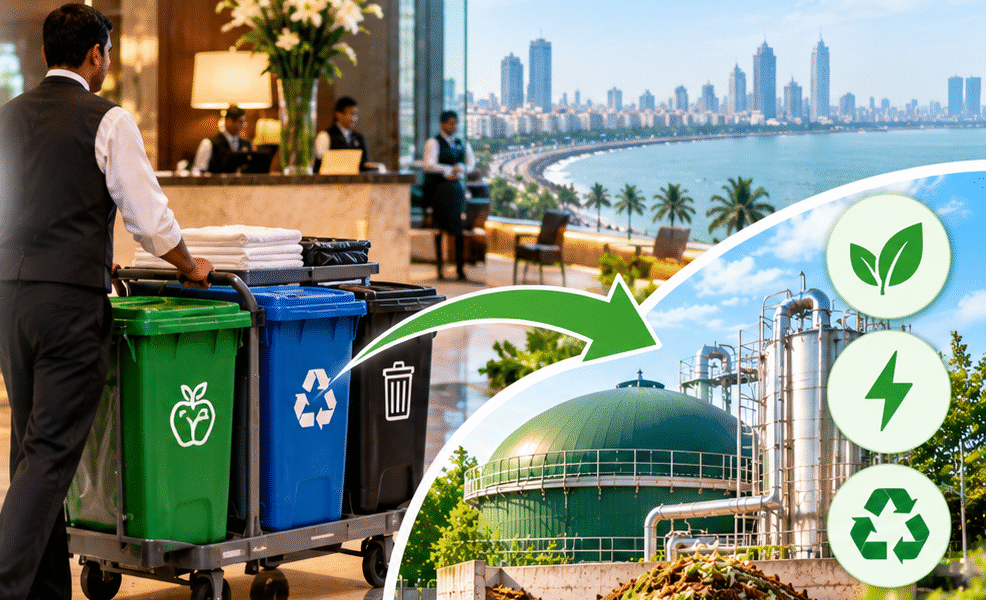
Hotel Waste Management in Mumbai: A Complete Guide for Hospitality Businesses
Hotels generate waste every day.
From breakfast buffets and restaurants to housekeeping, events, banquets and guest rooms, waste is created across almost every part of a hotel operation.
Food scraps, packaging, bottles, paper, plastics, garden waste and other materials can quickly add up.
For hotels in Mumbai, therefore, waste management is not simply about removing garbage from the premises. It is about creating a structured system for segregation, storage, collection, transportation and responsible processing.
A well-planned hotel waste management system can help hospitality businesses maintain cleaner operations while improving waste segregation and supporting resource recovery.
What Types of Waste Do Hotels Generate?
Hotel waste isn’t one single category.
Depending on the size and operations of the property, waste can come from:
Food Waste
Generated from restaurants, kitchens, buffets, banquets and room service.
Examples include:
- Vegetable and fruit waste
- Food preparation scraps
- Buffet leftovers
- Plate waste
- Spoiled food
- Kitchen waste
Dry Waste
This can include:
- Paper
- Cardboard
- Plastic packaging
- Glass bottles
- Metal cans
- Other recyclable materials
Housekeeping Waste
Guest rooms and housekeeping operations generate packaging, disposable items and other general waste.
Garden & Organic Waste
Hotels with landscaped areas may also generate:
- Leaves
- Grass clippings
- Pruned branches
- Other garden waste
Special or Sanitary Waste
Certain hotel operations may generate sanitary or other special-care waste that requires appropriate handling.
The first step in effective hotel waste management is understanding these different waste streams.
Why Waste Segregation Matters in Hotels
One of the biggest challenges in hospitality waste management is mixed waste.
When food waste is mixed with plastic, glass, paper and other materials, the entire waste stream becomes more difficult to process or recover.
Segregation at source means separating different waste streams where they are generated.
For hotels, this means considering segregation at locations such as:
- Hotel kitchens
- Restaurants
- Banquet halls
- Guest rooms
- Housekeeping areas
- Staff cafeterias
- Back-of-house areas
The better the segregation at source, the easier it becomes to manage the waste downstream.
Food Waste Is One of the Biggest Opportunities
For many hotels, the kitchen and food-service operations are significant sources of waste.
Breakfast buffets, large banquets, restaurants, room service and events can generate substantial amounts of organic waste.
Instead of treating this simply as garbage, hotels can establish a dedicated hotel food waste management process.
This can involve:
Segregation → Storage → Collection → Transportation → Processing → Resource Recovery
Depending on the waste stream and processing infrastructure, suitable organic waste can potentially be directed towards composting, biomethanation or other resource-recovery pathways.
What Happens After Hotel Waste Is Collected?
A professional waste management system should look beyond collection.
The journey should ideally be:
1. Segregation
Waste is separated into appropriate streams.
2. Storage
Waste is stored safely and appropriately until collection.
3. Collection
Waste is collected according to the hotel’s generation volume and operational requirements.
4. Transportation
Collected waste is transported to appropriate processing or treatment facilities.
5. Processing
Different waste streams are handled according to their characteristics.
6. Resource Recovery
Where feasible, materials and organic waste can be recovered for recycling, composting, energy recovery or other appropriate uses.
This moves the hotel away from a simple “collect and dispose” approach towards a more structured waste management model.
Mumbai Hotels Need a Practical Waste Management System
Mumbai’s hospitality sector includes everything from large luxury hotels and resorts to boutique properties, business hotels, restaurants and banquet facilities.
Each property has different waste volumes and operational requirements.
A hotel with multiple restaurants and large banquet operations will have very different food-waste requirements compared with a smaller business hotel.
That’s why hotel waste management in Mumbai should be designed around the property’s actual waste generation.
A practical system should consider:
- Daily waste volume
- Number of kitchens and restaurants
- Buffet and banquet operations
- Waste storage capacity
- Collection frequency
- Segregation practices
- Processing destination
- Documentation and reporting requirements
The Benefits of Professional Hotel Waste Management
Cleaner Back-of-House Operations
Regular collection can help prevent waste accumulation and overflowing bins.
Better Hygiene
Properly managed organic waste can help reduce odour and pest-attraction risks.
Improved Segregation
Dedicated systems make it easier for staff to separate waste correctly.
Better Resource Recovery
Segregated materials have greater potential for recycling or appropriate processing.
Operational Visibility
A structured system gives hotels greater visibility into what they generate and how it is managed.
Sustainability Goals
Responsible waste management can support a hotel’s broader environmental and sustainability objectives.
How Hotels Can Improve Waste Management
Hotels can start with five simple steps:
1. Audit your waste
Understand what types of waste are being generated and in what quantities.
2. Segregate at source
Separate food/organic waste from dry and other waste streams.
3. Train staff
Kitchen, housekeeping, F&B and banquet teams should understand the segregation process.
4. Establish regular collection
Collection frequency should match the hotel’s waste generation.
5. Know where your waste goes
Don’t stop at collection. Understand the processing and recovery journey.
Hotel Waste Management With Clean Geosphere
At Clean Geosphere, we help businesses build more structured approaches to waste management, including food waste collection and responsible processing.
Our solutions are relevant for:
Hotels | Restaurants | Cafés | Cloud Kitchens | Commercial Food Businesses
For hospitality businesses looking for hotel waste collection or food waste collection in Mumbai, the focus is simple:
Segregate better. Collect responsibly. Recover more.
Conclusion
Hotel waste management is not just about keeping bins empty.
It is about creating a system that manages waste from the moment it is generated to its final processing or recovery.
For Mumbai’s hospitality businesses, a structured approach to hotel waste management, food waste collection and resource recovery can help create cleaner, more efficient and more responsible operations.
Your hotel generates waste every day.
Make sure it has a responsible destination.
Looking for hotel or food waste management solutions in Mumbai? Talk to Clean Geosphere.