

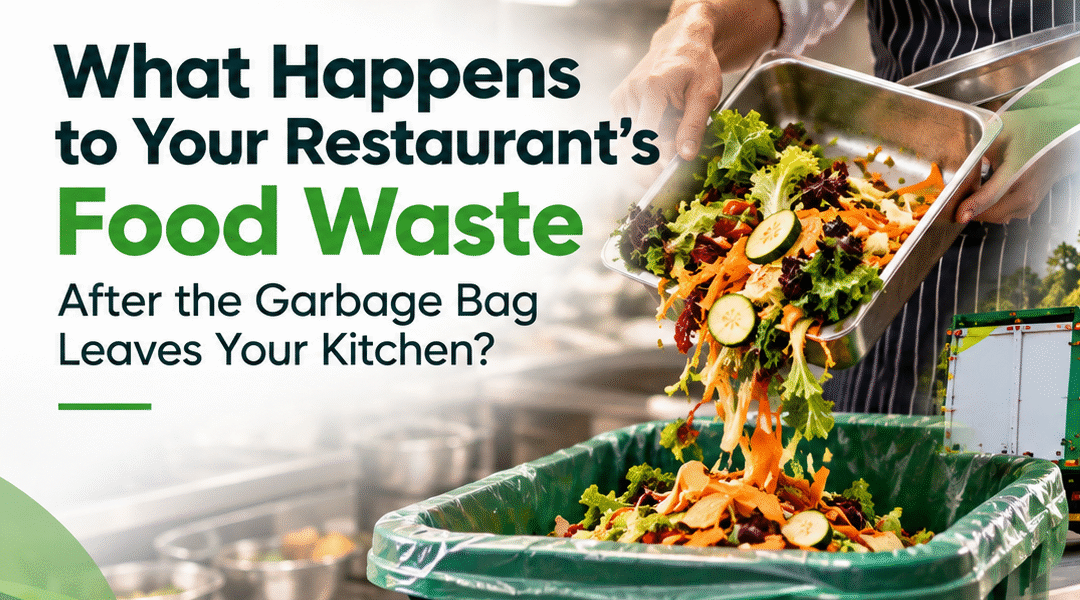
What Happens to Your Restaurant’s Food Waste After the Garbage Bag Leaves Your Kitchen?
Every restaurant generates food waste.
Vegetable peels, fruit scraps, preparation waste, spoiled food, buffet leftovers and plate waste can quickly add up. But once that garbage bag leaves your kitchen, where does it actually go?
Does it go directly to a landfill? Is it processed? Can it be converted into energy?
The answer depends on how the waste is segregated, collected, transported and processed.
For restaurants, hotels, cafés, cloud kitchens and other food businesses, managing food waste responsibly is no longer simply about getting waste out of the kitchen. It is about ensuring that the waste follows the right journey after collection.
The Journey of Restaurant Food Waste
A responsible food waste management system can be thought of as a simple journey:
Restaurant Kitchen → Segregation → Collection → Transportation → Processing → Resource Recovery
Let’s look at what happens at each stage.
1. It Starts in Your Kitchen
Food waste is generated at almost every stage of restaurant operations.
This can include:
- Vegetable and fruit peels
- Food preparation waste
- Spoiled or expired food
- Plate leftovers
- Buffet waste
- Meat and fish waste
- Bakery and kitchen waste
- Unused or rejected food ingredients
The first and most important step is segregation at source.
When food waste is mixed with plastic packaging, glass, metal and other materials, it becomes much more difficult to recover and process.
Under the Solid Waste Management Rules, 2026, source segregation has been strengthened through four waste streams, including wet waste, dry waste, sanitary waste and special-care waste. SWM Portal
For restaurants, the wet-waste stream is particularly important because it can contain a significant amount of organic and food waste.
2. The Food Waste Is Collected
Once food waste is properly segregated, it needs to be removed from the restaurant at an appropriate frequency.
This is where a professional food waste collection service can make a difference.
Instead of allowing food waste to accumulate in back-of-house areas, restaurants can use a planned collection system designed around their waste volume and operating schedule.
For a busy restaurant, hotel or cloud kitchen, this can help reduce:
- Odour
- Pest attraction
- Waste accumulation
- Unhygienic storage conditions
- Overflowing bins
- Uncontrolled disposal
The objective isn’t simply to collect a garbage bag.
The objective is to ensure the waste has a responsible destination after collection.
3. It Is Transported for Processing
After collection, segregated food waste can be transported to an appropriate processing or treatment facility.
This is an important distinction.
Waste collection is only one part of food waste management.
A proper system should consider the entire chain:
Collection → Transportation → Processing → Recovery
This approach helps move businesses away from the traditional “collect and dump” model towards a more circular approach to waste management.
4. Food Waste Can Become a Resource
Food waste doesn’t necessarily have to end its journey in a landfill.
Because food waste is biodegradable, it can potentially be directed towards different forms of organic waste processing depending on the composition of the waste and the available processing infrastructure.
These can include:
Composting
Organic waste can be biologically decomposed to produce compost and other organic outputs.
Biomethanation
Organic waste can be processed through anaerobic digestion to generate biogas, which can be used as a renewable energy source.
Waste-to-Energy Pathways
Certain organic waste streams can be directed towards processes that recover energy or other useful outputs.
In fact, Mumbai has already demonstrated the potential of food waste-to-energy. In a recent BMC initiative, around 39 tonnes of food waste from the Lalbaugcha Raja festival were diverted to a biomethanation plant in Sewri, where the waste was converted into biofuel used to power Sewri TB Hospital. The Times of India
This shows that food waste can be more than something that needs to be thrown away.
It can become a resource.
What About Restaurants Generating Large Volumes of Waste?
This becomes particularly important for larger restaurants, hotels, food courts and other commercial establishments.
The Solid Waste Management Rules, 2026 define Bulk Waste Generators using criteria including:
- 20,000 sq. m. or more floor area
- 40,000 litres or more water consumption per day
- 100 kg or more solid waste generation per day
Hotels and restaurant/food-court establishments are included in the CPCB’s BWG framework. SWM Portal
This means businesses generating significant quantities of waste should pay particular attention to how their waste is segregated, stored, collected and processed.
Why Proper Food Waste Collection Matters for Restaurants
Food waste management isn’t only an environmental issue.
It can also directly affect day-to-day restaurant operations.
Cleaner Back-of-House Areas
Regular collection helps prevent food waste from accumulating in kitchens and waste storage areas.
Better Hygiene
Food waste that sits for extended periods can create odour and attract insects and pests.
Better Waste Segregation
Separating organic food waste from recyclable and other waste makes downstream processing more effective.
More Responsible Disposal
A structured collection and processing system gives businesses greater visibility over where their waste goes.
Supporting a Circular Economy
Instead of viewing food waste as something with no value, businesses can participate in systems that recover useful resources from organic waste.
So, Where Does Your Food Waste Actually Go?
The answer depends on what happens after collection.
With an organised food waste management system, the journey can look like this:
Your Restaurant
↓
Food Waste Segregation
↓
Scheduled Food Waste Collection
↓
Responsible Transportation
↓
Organic Waste Processing
↓
Resource Recovery
↓
Compost / Biogas / Other Useful Outputs
That’s a very different journey from:
Kitchen → Garbage Bag → Mixed Waste → Landfill
How Clean Geosphere Helps Restaurants Manage Food Waste
At Clean Geosphere, we help businesses move towards a more structured and responsible waste management process.
Our waste management solutions are designed for restaurants, hotels, cafés, cloud kitchens and other bulk waste generators across Mumbai and other locations in Maharashtra.
Our approach can include:
Waste Assessment → Segregation → Collection → Transportation → Processing
We focus on helping businesses manage their waste responsibly while supporting resource recovery and a more circular waste management system.
Clean Geosphere provides waste management solutions to bulk waste generators across Mumbai, Navi Mumbai, Thane, Pune, Panvel, Mira Road, Nashik and Pimpri-Chinchwad. Clean Geosphere
Your Food Waste Has a Journey. Make It a Responsible One.
The next time a food waste bag leaves your restaurant kitchen, remember:
That’s not the end of the journey. It’s only the beginning.
With proper segregation, collection and processing, food waste can move from being a daily operational problem to becoming part of a more sustainable resource-recovery system.
Looking for Food Waste Collection in Mumbai?
Clean Geosphere can help your restaurant, hotel or food business manage food waste responsibly—from collection to processing.
Your business generates the waste.
We help give it a responsible destination.
Contact Clean Geosphere Private Limited to discuss your food waste management requirements.
SEO FAQ Section
1. What happens to restaurant food waste after collection?
Restaurant food waste can be transported to appropriate organic waste processing facilities, where it may be treated through processes such as composting or biomethanation, depending on the waste stream and available infrastructure.
2. How can restaurants manage food waste?
Restaurants should begin with source segregation, appropriate storage, regular collection and responsible processing of food waste.
3. What is food waste collection?
Food waste collection is the organised removal of segregated organic waste from restaurants, hotels, cafés and other food businesses for transportation and appropriate processing.
4. Can food waste be converted into energy?
Yes. Organic food waste can be processed through technologies such as anaerobic digestion to produce biogas. Mumbai’s recent food-waste biomethanation initiative demonstrates this potential. The Times of India
5. What is a Bulk Waste Generator?
Under the SWM Rules 2026, an entity can fall within the BWG definition if it meets at least one specified threshold relating to floor area, water consumption or solid-waste generation. The CPCB framework includes hotels and restaurant/food-court establishments. SWM Portal
6. Where can I get food waste collection in Mumbai?
Businesses in Mumbai looking for structured food waste and waste management solutions can contact Clean Geosphere Private Limited for their requirements.